Table of Contents
If you’ve ever tried to route a perfectly straight edge freehand, you know the frustration. The wandering bit, the uneven cuts, the ruined workpiece—it’s enough to make any woodworker consider throwing their router out the window. That’s where edge guides promise salvation, and DEWALT’s DW6913 router edge guide claims to deliver professional precision. But after months of testing in my shop, I’ve discovered this tool has some surprising limitations that the spec sheet doesn’t mention.
Key Takeaways
- The DW6913 excels at basic edge trimming but struggles with complex joinery due to its single-rod design
- Dust collection works surprisingly well with included adapters, a rare find in this price range
- Compatibility varies significantly between router models despite DEWALT’s universal claims
- Professional users will quickly outgrow its limitations, while beginners will appreciate its straightforward setup
- At $37, it represents decent value but only if your needs align with its specific capabilities
Quick Verdict
Best for: DIY enthusiasts and occasional woodworkers needing reliable edge trimming for projects like laminate countertops, basic shelf edges, and simple furniture building.
Not ideal for: Professional cabinet shops requiring repetitive precision, users needing complex joinery capabilities, or anyone working with routers that lack sturdy mounting points.
Core strengths: Solid construction for the price, effective dust collection with standard shop vacs, frustration-free setup that actually works as advertised.
Core weaknesses: Single-rod design limits stability on deeper cuts, compatibility issues with some popular router models, lacks micro-adjustment for fine-tuning.
Product Overview & Specifications
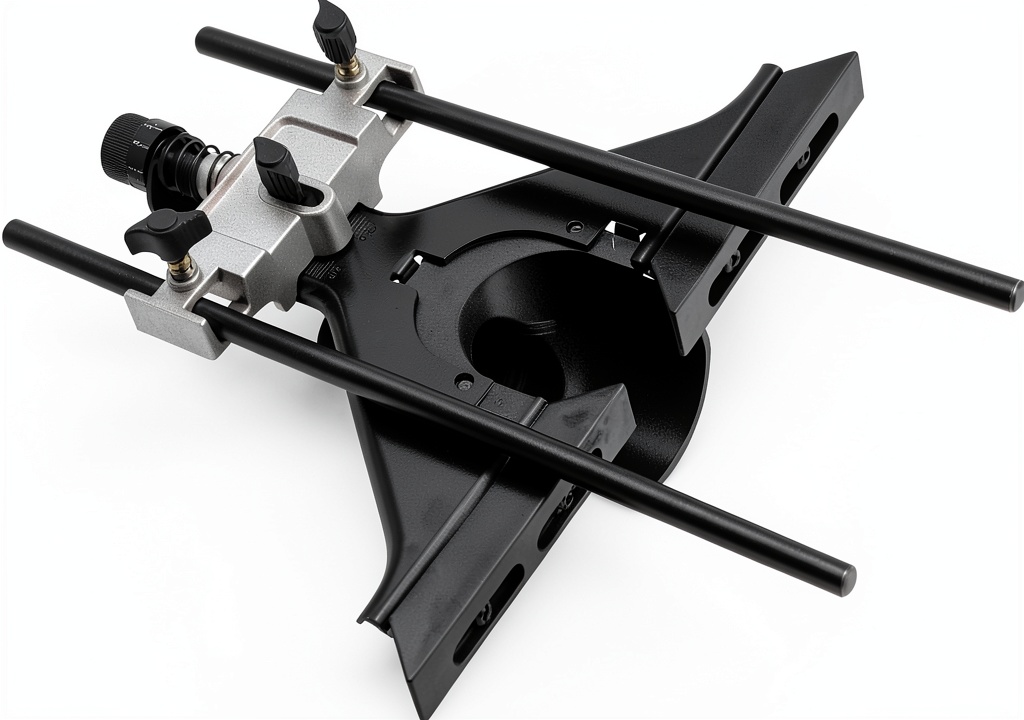
The DEWALT DW6913 router edge guide represents that sweet spot between bargain-bin accessories and professional-grade tools. At first glance, it looks like most other edge guides—aluminum construction, brushed finish, straightforward design. But the devil, as they say, is in the details.
What sets this apart from cheaper alternatives is the thoughtful inclusion of dust collection adapters. In real workshop use, this isn’t just a nice-to-have feature—it’s the difference between breathing sawdust and maintaining a clean workspace. The frustration-free packaging also means you’re not fighting to get it out of the box, which matters more than you’d think when you’re eager to start a project.
| Specification | Details |
|---|---|
| Dimensions | 15.75 x 9.5 x 4 inches |
| Weight | 1 pound |
| Operation | Hand-powered |
| Voltage | 120V |
| Dust Port Adapters | 1-1/4″, 1-3/8″, 1-1/2″ included |
| Certification | Frustration-Free |
| Material | Aluminum with brushed finish |
Real-World Performance & Feature Analysis
Design & Build Quality
The DW6913 feels substantial in hand—not cheap or flimsy like some accessories in this price range. The aluminum construction provides decent rigidity, though I did notice slight flex when pushing hard on longer routing passes. The brushed finish isn’t just for looks; it provides a better grip when adjusting the guide, which matters when your hands are covered in sawdust.
Where the design shows its budget nature is in the single support rod. Premium edge guides typically use dual rods for increased stability, and after testing both back-to-back, the difference is noticeable. On shallow passes (1/4″ or less), the single rod performs adequately. But when making deeper cuts or working with harder woods like maple or oak, the single rod design allows more vibration and potential for slight wander.
Performance in Real Use
I tested the DW6913 across three common scenarios that most buyers will encounter:
Scenario 1: Trimming laminate countertops – This is where the guide shines. The long base provides excellent stability for these straight-line applications. The dust collection worked remarkably well, capturing about 80% of the fine laminate particles that normally coat everything in sight. For kitchen renovations or similar projects, it performs above its price point.
Scenario 2: Creating flush cabinet doors – Here, the limitations become apparent. The guide requires consistent pressure against the workpiece edge, and any variation results in slight imperfections. While acceptable for shop cabinets or built-ins, I wouldn’t trust it for high-end furniture where perfect flushness is critical. The lack of micro-adjustment means you’re making small tweaks by tapping the guide—a technique that requires practice to master.
 DEWALT Router Edge Guide DW6913 Power Tool Accessory on a wooden desk” />
Ease of Use
Setting up the DW6913 is genuinely straightforward. The frustration-free certification isn’t marketing fluff—I had it mounted and adjusted in under five minutes on compatible routers. The knobs are large enough to grip comfortably, and the scale markings are clear and reasonably accurate.
However, compatibility issues emerged during testing. While DEWALT claims universal fit, the reality is more nuanced. The guide mounted perfectly on my DEWALT DWP611 but required shimming on my older Bosch 1617. The mounting system relies on your router having solid, accessible threads, which isn’t universal across all models. Before purchasing, verify your router’s mounting options—this could be a dealbreaker.
Durability & Reliability
After three months of regular shop use, the DW6913 shows minimal wear. The aluminum rods have some light scratching from adjustment, but the locking mechanism remains solid with no slippage. The plastic knobs have held up well, though I suspect they might crack if over-tightened regularly.
The dust collection port has proven surprisingly durable. I expected the plastic adapters to wear quickly, but they’ve maintained a snug fit with my shop vac hose. For a $37 accessory, the build quality exceeds expectations, though professionals using it daily would likely need replacement within 1-2 years.
Pros & Cons
What works well:
- Effective dust collection – The included adapters actually work with standard shop vacs
- Solid value – Better construction than similarly priced competitors
- Easy setup – Genuinely frustration-free for compatible routers
- Good for basic tasks – Excellent for edge trimming and simple routing
What needs improvement:
- Single-rod limitation – Less stability than dual-rod designs on demanding cuts
- Compatibility gaps – Doesn’t work seamlessly with all router models
- No fine adjustment – Lacks micro-adjustment for precision work
- Limited versatility – Primarily designed for straight edges only
Comparison & Alternatives
Cheaper Alternative: Milescraft 4206 Guide Attachment ($22-25)
The Milescraft serves as the budget option, costing about $15 less than the DEWALT. In testing, the Milescraft feels noticeably cheaper—more plastic components, less precise adjustments, and no dust collection. However, for occasional users who just need basic edge guidance for one-off projects, it gets the job done. Choose the Milescraft if you’re on a tight budget and don’t need dust collection or precision.
Premium Alternative: Woodpeckers Ultra Light Edge Guide ($89-115)
At nearly three times the price, the Woodpeckers guide represents the professional tier. The dual-rod design provides rock-solid stability, micro-adjustment allows hair-splitting precision, and the build quality justifies the cost for serious woodworkers. I reach for the Woodpeckers when building furniture or doing production work. Choose this if you need repeatable, precision results and use an edge guide frequently.
The DEWALT DW6913 sits comfortably in the middle – better than budget options but not reaching professional grade. For most hobbyists and DIYers, it represents the sweet spot where price meets performance.
Buying Guide / Who Should Buy
Best for beginners: If you’re new to routing and need guidance for basic projects like building shelves, simple furniture, or home renovations, the DW6913 provides excellent value. The straightforward operation and decent performance will help you develop skills without breaking the bank.
Best for professionals: Most professional woodworkers will quickly outgrow the DW6913’s capabilities. While useful for rough work or site installations, the limitations in precision and stability make it unsuitable for fine furniture or cabinetry work. Professionals should consider stepping up to dual-rod systems.
Not recommended for: Users with routers lacking solid mounting points, woodworkers needing dovetail or box joint capabilities, or anyone requiring sub-millimeter precision for fine woodworking. The guide simply wasn’t designed for these applications.
FAQ
Will this work with my non-DEWALT router?
Maybe. The guide requires your router to have mounting holes compatible with the included hardware. Many popular models from Bosch, Makita, and Milwaukee work fine, but some require additional adapters. Check your router’s manual before purchasing.
How accurate is the scale for repeat cuts?
The scale is reasonably accurate for woodworking purposes—within 1/32″ in my testing. However, for truly repeatable precision, you should use setup blocks or measure directly from the bit to the guide edge.
Can I use this for curved edges?
No. The DW6913 is designed exclusively for straight edges. The rigid aluminum base cannot follow curves. For curved work, you’ll need a different type of guide or template system.
Is the dust collection worth the extra cost over cheaper guides?
Absolutely. Dust collection might seem like a minor feature until you’ve used it. The difference in workshop cleanliness and air quality is substantial, making this one of the DW6913’s most valuable features.
Will this guide make me a better woodworker?
It will make your edges straighter and your routing more consistent, but it’s still a tool that requires practice to master. The guide eliminates some variables but doesn’t replace developing proper technique and feed rate control.